
Copal and Resins
Copal is the resin that Andean and Amazonian peoples were burning long before incense became something you buy in a shop. What we sell is the raw resin, collected in Peru, not a resin-flavoured stick.
What black copal actually is
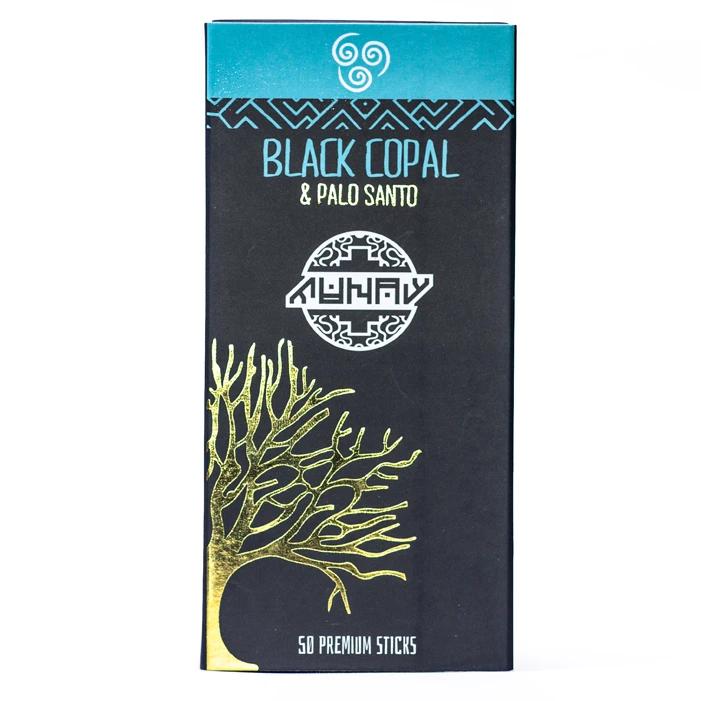
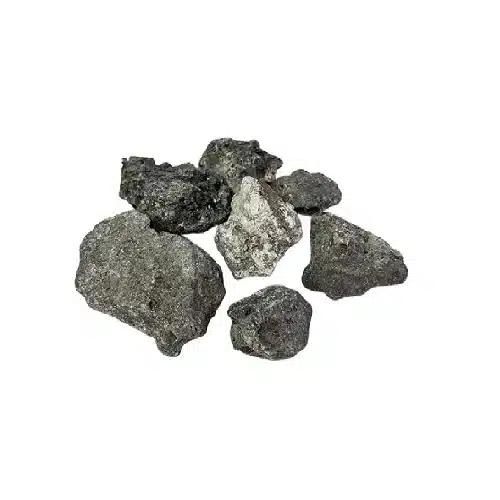
Copal is tree sap that has hardened. Black copal comes from Amazonian trees of the Protium family and is darker and denser than the pale Mexican copal most people have seen. It smells resinous and slightly balsamic, with less sweetness than palo santo and more body.
It is collected by scoring the bark and returning later for the hardened sap — the tree is not felled, and a productive tree is tapped for years.
How to burn it
Resin does not burn on its own. You need heat underneath: a charcoal disc in a heat-proof bowl, or a burner with a tealight below the dish. The tealight method is slower and gentler; charcoal is faster and much stronger.
Start with less than you think. A piece the size of a pea fills a room. Copal on charcoal produces considerably more smoke than a stick, and the mistake almost everyone makes the first time is using too much.
Copal, myrrh and the shaman's blend
Myrrh is drier and more bitter, the classic resin of the eastern Mediterranean. Copal is rounder and greener. Palo santo, ground into the mix, brings the sweetness and the citrus edge.
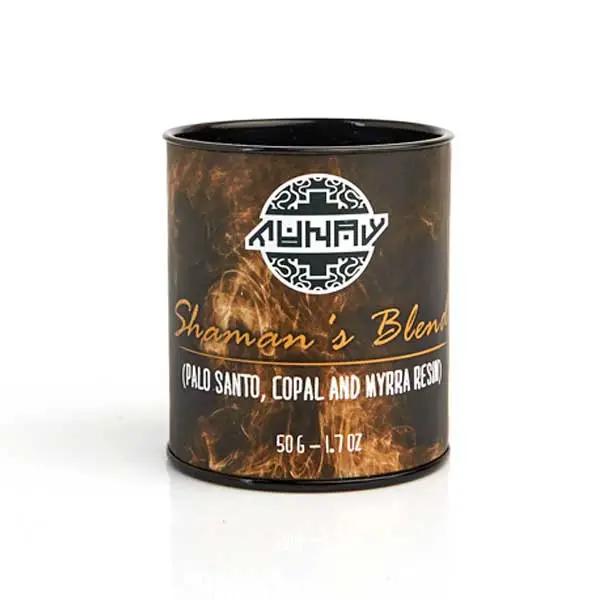
The blend we sell as shaman's blend is those three together, in the proportion the people who taught us to make it use. It is not a marketing name applied to a generic mix.
Bulk and wholesale
Resin is sold in retail jars and in bulk by the kilo. Because it is a raw material, it is also what several of our private-label customers buy in order to make their own products.
Tell us the volume and the destination port and we return a landed cost within 24 hours. Resins carry the same forestry documentation as our wood.
Frequently asked questions
- What is the difference between copal and palo santo?
- Copal is hardened tree sap; palo santo is wood. Copal needs a heat source under it and gives dense, balsamic smoke. Palo santo lights on its own and gives a sweeter, lighter smoke. They are often burned together.
- How long does 100 g of copal last?
- Longer than most people expect. Used at the recommended amount — a pea-sized piece per session — 100 g is on the order of a hundred sessions.
- Do I need charcoal?
- Charcoal is one option and the strongest. A burner with a tealight underneath works too and is gentler, which many people prefer indoors.
Before you buy
Need volume or private label?
Tell us the volume and the destination port and we return a landed cost within 24 hours.
Request a quote